Why Does My Hot Water Run Out So Fast? Causes, Fixes & When to Call a Plumber
Hot water running out too quickly is one of the most common plumbing complaints in Prosper and Celina, TX homes. A 40-gallon water heater should provide approximately 30-40 minutes of continuous hot water for a typical household. When hot water depletes in under 10 minutes, the problem usually stems from sediment buildup, a failing heating element, or an undersized hot water tank. This guide covers the most common causes of rapid hot water depletion, DIY troubleshooting steps, and when professional water heater repair makes sense.
How Long Should Hot Water Last? Expected Performance by Tank Size
Water heater capacity directly determines how long hot water lasts during continuous use. Recovery time—the period needed to reheat a full tank—ranges from 30 minutes for gas water heaters to 60-90 minutes for electric water heaters. Here's what to expect from common tank sizes:
- 30-gallon water heater: Provides roughly 20-25 minutes of shower time at 2.5 gallons per minute.
- 40-gallon hot water tank: Extends that window to 30-35 minutes under the same conditions.
- 50-gallon water heater: Delivers 40-50 minutes of continuous hot water before requiring recovery time.
5 Most Common Reasons Hot Water Runs Out Quickly
When hot water disappears faster than expected, one of these five issues is usually responsible:
- Sediment buildup in the tank: Hard water in Prosper and Celina contains high concentrations of calcium and magnesium minerals that settle at the bottom of water heater tanks. Sediment accumulation of just 1-2 inches can reduce effective tank capacity by 10-15%. A 40-gallon tank with significant sediment buildup may function like a 30-gallon unit.
- Failing or burned-out heating elements: Electric water heaters contain two heating elements—upper and lower. When the lower heating element fails, only the top portion of the tank heats properly, cutting available hot water by approximately 50%. Heating element replacement costs $150-$300 for professional installation.
- Thermostat set too low or malfunctioning: The recommended thermostat setting for residential water heaters is 120°F. Thermostats set below 110°F produce lukewarm water that feels cold quickly when mixed with tap water. A malfunctioning thermostat may cycle heating elements off prematurely.
- Broken dip tube mixing cold and hot water: The dip tube directs incoming cold water to the bottom of the tank. Broken dip tubes allow cold water to enter near the top, mixing directly with heated water and dramatically reducing output temperature. Dip tube replacement costs $100-$200 including parts and labor.
- Water heater tank too small for household demand: A family of four typically requires a minimum 50-gallon tank-style water heater or a tankless unit rated for 8+ gallons per minute. Running a dishwasher (6 gallons), washing machine (20 gallons), and shower (25 gallons) simultaneously exceeds the capacity of most 40-gallon tanks.
DIY Troubleshooting: How to Diagnose Hot Water Problems
Before calling a plumber, try these diagnostic steps to identify the source of your hot water problem:
Step 1: Check the Thermostat Temperature Setting
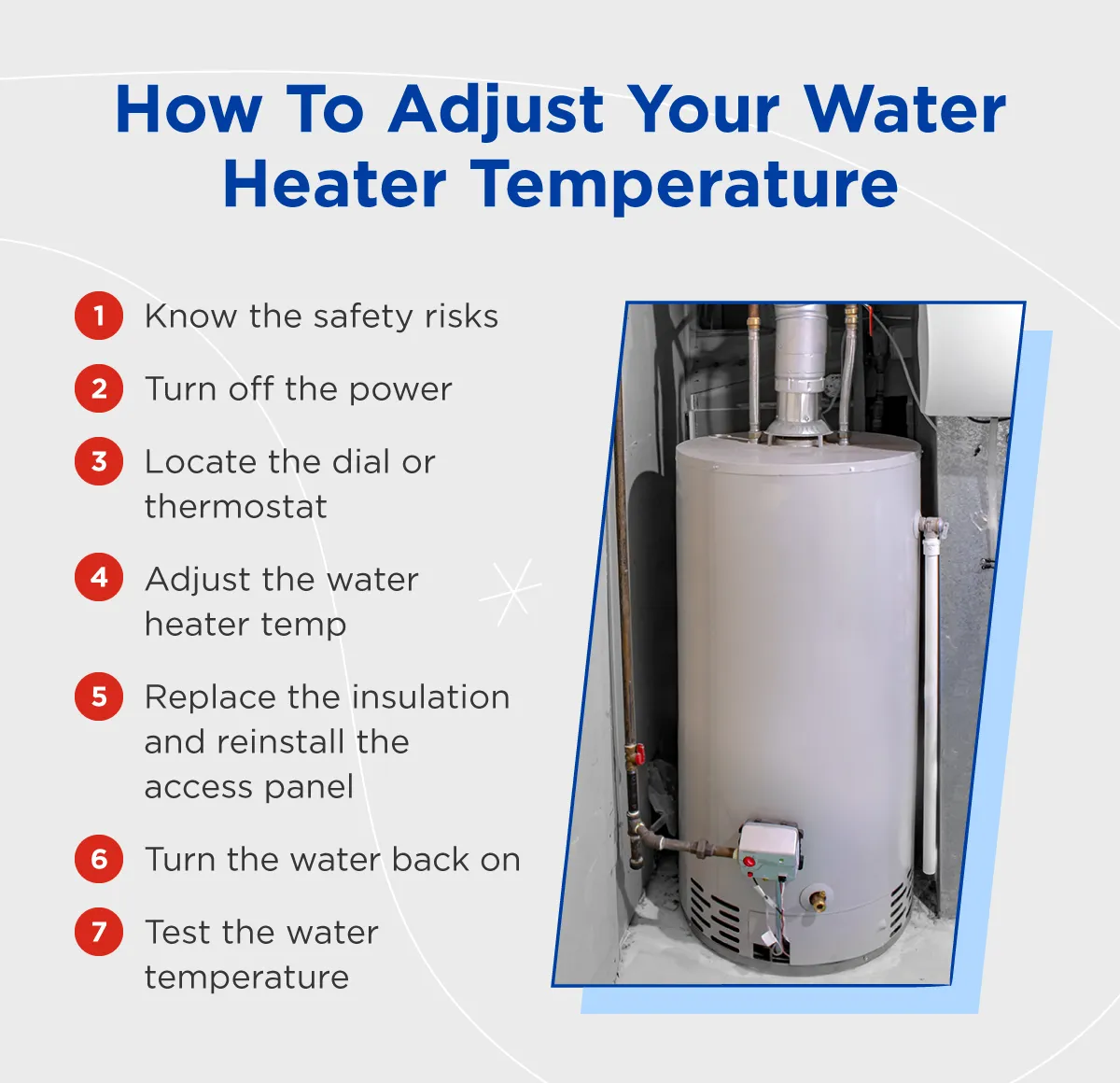
Locate the thermostat access panel on the side of your water heater and remove the cover. Electric water heaters have thermostats behind insulation near each heating element. Gas water heaters have a temperature dial near the bottom of the unit. Verify the thermostat is set to 120°F—the Department of Energy's recommended setting for residential hot water systems. Adjust if needed and wait 2-3 hours before testing.
Step 2: Inspect for Water Leaks Around the Tank
Water leaks reduce tank pressure and force the heating system to work harder to maintain temperature. Inspect these areas for signs of moisture:
- The floor around your water heater for puddles or water stains.
- Pipe connections at the top of the tank where cold water inlet and hot water outlet lines connect.
- The temperature and pressure relief valve (T&P valve) on the side of the tank for dripping.
Small leaks around fittings may only require tightening, while tank corrosion leaks indicate the water heater needs replacement.
Step 3: Flush the Tank to Remove Sediment
Flushing a water heater tank removes sediment that reduces heating efficiency. Prosper homeowners with hard water should flush their water heater tanks every 6-12 months. Follow these steps:
- Turn off the water heater power source (gas valve or circuit breaker).
- Attach a garden hose to the drain valve at the bottom of the tank.
- Open the T&P valve to allow air into the system.
- Open the drain valve and let water flow until it runs clear—typically 5-10 minutes for a standard 40-gallon tank.
- Close the drain valve, remove the hose, close the T&P valve, and restore power.
Step 4: Test Heating Elements with a Multimeter
Heating element testing requires turning off power to the water heater at the circuit breaker. Remove the access panel and insulation to expose the heating element terminals. Set a multimeter to the ohms (Ω) setting and touch probes to both element terminals. A functioning 4,500-watt heating element reads between 10-16 ohms. A reading of zero or infinity indicates a failed heating element requiring replacement. Homeowners uncomfortable with electrical testing should contact a licensed plumber for diagnosis.
When to Call a Professional Plumber for Water Heater Repair
Professional water heater service is recommended when DIY troubleshooting doesn't resolve the problem or when repairs involve gas lines or electrical components. Signs that require professional attention include:
- No hot water at all: Indicates complete heating failure requiring diagnosis.
- Rusty or discolored hot water: Suggests internal tank corrosion.
- Rumbling or popping sounds from the tank: Signals severe sediment buildup.
- Water pooling around the base: Points to a tank leak that often means replacement.
- Gas odors near the water heater: A gas leak emergency—leave the area and call for help immediately.
Licensed plumbers carry specialized tools and have training to safely diagnose and repair water heating systems.
Frequently Asked Questions About Hot Water Running Out
How much does water heater repair cost in Prosper, TX?
Water heater repair costs in Prosper range from $100-$500 depending on the problem. Thermostat replacement costs $100-$200. Heating element replacement costs $150-$300. Dip tube replacement costs $100-$200. Complete water heater replacement costs $800-$1,500 for a standard tank-style unit or $2,000-$4,500 for a tankless water heater installation.
How long do water heaters last before needing replacement?
Tank-style water heaters last 8-12 years with proper maintenance. Tankless water heaters last 15-20 years. Water heaters in Prosper and Celina may have shorter lifespans due to hard water accelerating sediment buildup and corrosion. Annual maintenance including tank flushing and anode rod inspection extends water heater lifespan.
Should I repair or replace my water heater?
Water heater replacement makes more financial sense than repair when the unit is over 10 years old, when repair costs exceed 50% of replacement cost, when the tank shows signs of corrosion or leaking, or when energy bills have increased significantly due to reduced efficiency. Modern water heaters are 10-20% more energy efficient than models from 10+ years ago.
Professional Water Heater Service in Prosper and Celina, TX
Specialty Plumbing provides expert water heater repair, maintenance, and installation throughout Prosper, Celina, and the surrounding North Texas communities. Our licensed plumbers diagnose hot water problems quickly and provide upfront pricing before beginning any work. Same-day service is available for urgent water heater issues. Don't let a small leak lead to bigger water damage—contact Specialty Plumbing for reliable hot water service right in your community.